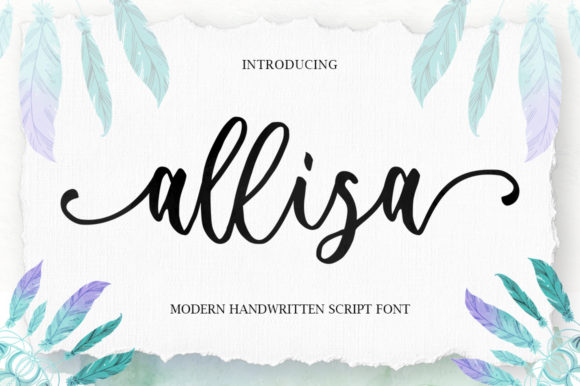
Allisa Font for Web Design
Testing Allisa in a hero section of a boutique online store, I immediately noticed how it elevated the visual tone. This script handwritten font blends calligraphic grace with modern simplicity, making it ideal for web design projects that need a touch of sophistication without sacrificing clarity.
Allisa for Boutique Online Stores and E-Commerce Branding
Allisa works exceptionally well in e-commerce branding, especially when paired with clean, minimal layouts. As a fonts designer, I found that its flowing curves and refined structure add a sense of luxury to product landing pages. Using it for headings and banners gives a premium feel while maintaining readability across devices.
The font’s versatility allows it to shine in both bold headlines and subtle accents. For an online store selling handmade goods, Allisa can be used for category titles, promotional tags, or even as part of the logo treatment. Its handwritten style adds warmth, which is essential for building trust with customers who value artisanal quality.
Allisa in Mobile Layouts and Responsive Design
When testing Allisa on mobile screens, I was pleased with how it scaled. The font maintains legibility at smaller sizes, making it suitable for buttons, labels, and short text blocks. However, I recommend using it sparingly in body copy—opting for a complementary sans serif for longer paragraphs.
On dark backgrounds, Allisa still holds up well, though I noticed that some characters could appear slightly lighter than others. Adjusting the contrast or using a bolder weight helped maintain visual balance. For image overlays, the font’s organic flow complements textures and gradients without clashing.
Allisa for Coaching Websites and Digital Portfolios
For a coaching website, Allisa offers a personal and professional touch. I used it in the hero section and service headings, where it added a human element to the content. Its script style feels more approachable than a traditional serif or sans serif, which is perfect for a digital brand aiming to build a connection with its audience.
In a portfolio homepage, Allisa can be used for project titles, taglines, or featured sections. Pairing it with a simple sans serif like Roboto or Open Sans creates a clean, modern look. This font pairing ensures that the design remains readable while keeping the focus on the content.
Allisa in Social Media Graphics and Email Campaigns
When designing social media graphics for a client, I found that Allisa worked well in short-form text like captions, headlines, and call-to-action buttons. Its fluidity makes it stand out against static images, and it pairs nicely with bold colors or minimalist backgrounds.
For email campaigns, I used Allisa in subject lines and header sections. It added a polished, branded feel without overwhelming the reader. However, I made sure to keep the rest of the email content in a more standard typeface to maintain overall readability.
Allisa for Course Sales Pages and Blog Headers
On a course sales page, Allisa can be used for the main headline and key benefits. Its elegance helps convey the value of the course while keeping the design visually engaging. I tested it on a landing page for an online writing workshop and found that it complemented the instructional tone of the content.
For blog headers, Allisa brings a creative energy that stands out from typical blog fonts. It’s particularly effective for lifestyle or creative niche blogs where visual appeal plays a big role. However, I advise using it only for primary headings rather than subheadings or body text.
Allisa in Brand Kits and Digital Templates
When building a digital brand kit, Allisa serves as a strong visual anchor. It’s great for logo treatments, business cards, and social media profiles. The font’s versatility means it can be adapted for different platforms without losing its identity.
I also explored using Allisa in templates for clients, such as website headers and newsletter designs. Its availability in multiple weights and styles made it easy to adjust for different use cases. Including alternates and ligatures allowed for more refined typography in custom designs.
Allisa for Landing Pages and Promotional Campaigns
On a campaign landing page for a new product launch, Allisa was used in the main headline and supporting text. Its script style gave the page a fresh, modern vibe that aligned with the brand’s aesthetic. I paired it with a neutral background to ensure the font remained the focal point.
For promotional banners, Allisa’s flowing form created a dynamic visual effect. It worked well with gradient backgrounds and bold color schemes, adding a layer of sophistication without overpowering the message. This font is particularly useful for campaigns that aim to evoke emotion and create a memorable impression.
Allisa in Webfont Projects and Commercial Use
Before integrating Allisa into a live project, I checked its webfont availability and licensing terms. The font is available in multiple formats, including WOFF and TTF, making it easy to embed in websites and digital assets. Its commercial license allows for use in client projects, which is a major plus for designers and developers.
Testing Allisa in various web environments, I found that it performed consistently across browsers and operating systems. The font includes multilingual support, which is essential for global brands or international audiences. Ensuring that the font is properly embedded and optimized for performance is crucial for maintaining fast load times and a smooth user experience.